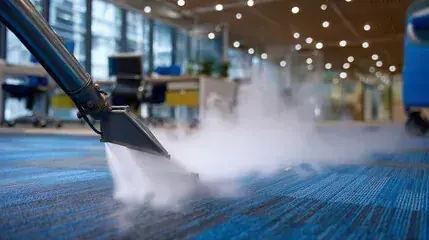
The Best Time of Year to Clean Your Carpet Isn't Spring — It's Fall
"When should I actually get this done?" It is the most common question our office fields that has nothing to do with price, and nearly everyone who asks it already has an answer in mind. They say spring. They say it the way people say things they have never really examined, because spring cleaning is one of those phrases that arrives pre-installed.
The honest answer, for anyone who lives somewhere that salts its roads, is fall. If you deep clean your carpet once a year and you get to choose the month, choose one before the first snow rather than after the last one. That is not a scheduling pitch dressed up as advice. It follows from what actually happens to carpet fiber between December and March, and once you see the mechanism, the spring habit starts to look like what it is: a calendar tradition, not a conclusion about carpet.
So this article does three things. It explains why winter is the single most destructive stretch of the year for a floor, using the carpet manufacturers' own maintenance requirements rather than ours. It gives you the free work that matters more than any booking. And it tells you plainly when to skip professional cleaning this fall, because for a good number of households that is the correct answer and we would rather say so than sell you something. Only after that do we talk about our own carpet cleaning service.
The Short Answer
In any climate with a salted, slushy winter, the best time of year to professionally clean carpet is fall — roughly September through mid-November — before the first de-icer hits the sidewalks. Three things make that window better than every alternative:
- You remove a summer's worth of abrasive grit before winter traffic spends five months grinding it deeper into the pile.
- You enter the hardest season with a clean baseline, so salt residue lands on bare fiber you can maintain rather than on soil that is already there to bond with.
- Carpet dries faster in fall than at any other point in the cleaning year, because you can still open windows, humidity is falling, and the furnace is not yet running full time.
Spring cleaning does none of that. It arrives after the damage, not before it. Cleaning in April is worth doing — we do plenty of it, and salt residue genuinely needs flushing out — but it is repair work. Fall is prevention, and prevention is cheaper.
One caveat worth stating plainly: if you live somewhere without a salt season, this specific reasoning does not apply to you. The underlying principle still does. Clean at the end of your dirtiest season, not months after it, whether that season is beach summer, muddy spring, or wildfire smoke.
Why "Spring Cleaning" Became the Default Answer
The tradition is older than wall-to-wall carpet and older than central heating. When homes were heated by burning coal and wood, a winter sealed up against the cold coated every interior surface in soot and ash. Spring was the first moment it was warm enough to throw the windows open, haul the rugs into the yard, and beat them. The timing was not a judgment about textiles. It was the first day the work was physically possible.
That constraint disappeared decades ago and the habit stayed. It survives partly because spring is when dirt becomes visible — low winter light hides a great deal, and the first strong March sun through a window reveals a traffic lane you had stopped noticing. But visibility is not the same as urgency. By the time you can see the dulling, the abrasion that caused it has already happened, and no amount of cleaning restores a fiber that has been scratched flat.
The practical consequence is that most households clean at the point of maximum regret rather than maximum benefit. Move the same appointment five months earlier and the identical work protects fiber instead of mourning it.

What Road Salt Actually Does to Carpet: Three Separate Problems
People treat tracked-in salt as one issue — a white mark that needs removing. It is really three different problems with three different mechanisms, and only one of them is the white mark.
The scale is easy to underestimate. Chicago's Department of Streets and Sanitation used about 322,000 tons of salt in the winter of 2020-21, and in the unusually mild winter of 2023-24 it still spread roughly 119,500 tons. That is the light year. All of it lands on the pavement you cross on the way to your front door, and a measurable fraction of it ends up on your floor.
1. It is abrasive, and that is the damage nobody sees
De-icing salt arrives in your carpet as hard crystalline grains. Once those grains work below the surface of the pile, every footstep presses them against fiber and drags them sideways. That is abrasion in the literal sense, and it is the same process we described in detail when we wrote about Lake Michigan sand in your carpet. A scratched fiber scatters light differently than a smooth one, so the result is not a spot but a traffic lane that looks permanently dull next to the carpet under your sofa.
This is the problem that makes timing matter more than anything else in this article. Abrasion is cumulative and irreversible. Grit removed in October cannot damage anything in January.
2. It pulls moisture out of the air and holds it in your pile
This is the property most homeowners have never heard of, and it explains why winter carpet problems behave so strangely. The calcium chloride and magnesium chloride in modern ice melt are hygroscopic: they actively draw moisture out of the surrounding air. That is not a side effect, it is the mechanism by which they work on pavement.
They do not stop doing it once they are in your carpet. Residue sitting at the base of the pile keeps pulling humidity in, which means the bottom of your carpet stays subtly damp for months in a house that is otherwise bone dry from the furnace. Damp, dark, and warm at the base of the fiber is precisely the condition that produces musty odor and gives dust mites and mildew somewhere to live. It also explains the thing that drives people crazy: you clean a salt mark, it looks perfect, and two weeks later a white haze is back. That is residual salt drawing moisture up through the pile and recrystallizing at the surface — which is why salt has to be flushed and extracted, not blotted.
3. The residue keeps attracting new dirt
Salt residue left in fiber makes carpet re-soil faster than clean carpet does. Every subsequent boot deposits dirt onto a surface that is slightly tacky and chemically primed to hold it. This is the compounding effect: a carpet that went into December already carrying summer grit and then collected salt in January is not twice as dirty by March, it is considerably worse than that, and it takes a longer and more expensive cleaning to correct. Once it reaches the stage of visible marks and set-in spots, that is stain and odor removal territory rather than routine maintenance.

Fall Is Also the Fastest-Drying Window of the Year
Dry time is the most common practical objection to booking a cleaning, and it is a fair one. It is also the quietest argument in favor of autumn.
Hot water extraction leaves carpet damp, and how fast that moisture leaves depends on air movement and on how much water the surrounding air can still absorb. In September and October you can open a window without heating the street, indoor humidity is coming down off its summer peak, and the furnace is not yet running hard enough to complicate things. Those conditions dry carpet noticeably faster than humid August air or a sealed January house.
Drying speed is not only about convenience. Slow drying is what causes wicking, where soil still deep in the backing travels upward with the moisture and reappears at the surface a day later as a faint shadow of the spot you thought was gone. Faster drying means less wicking, less risk of a musty smell setting in, and a cleaning that still looks right a week later.
The Other Fall Deadline: Your Windows Are About to Close
There is a second seasonal reason that has nothing to do with salt. From roughly November onward, most homes stop exchanging air with the outdoors and start recirculating the same indoor air for five months.
The EPA's guide to indoor air quality is blunt about the baseline. It reports that "the air within homes and other buildings can be more seriously polluted than the outdoor air in even the largest and most industrialized cities," has measured "levels of about a dozen common organic pollutants to be 2 to 5 times higher inside homes than outside," and notes that people spend approximately 90 percent of their time indoors. It also points out that some weather conditions drastically reduce how much outdoor air enters a home, so pollutants build up even in houses normally considered leaky.
Carpet's role here is genuinely two-sided, and we would rather explain it accurately than frighten you into a booking. Carpet is a sink: it traps dust, dander, and particulates and holds them out of the air you breathe. That is a real benefit, but it holds only while there is capacity left. A saturated carpet stops absorbing and starts releasing, and footfall on a loaded pile puts that material back into circulation. Cleaning in autumn empties the sink before you shut the windows for the season. If you are already fighting dust that keeps returning no matter how often you wipe surfaces, the ductwork is the other half of that system, and our air duct cleaning page covers it.
How Often, Not Just When — According to the People Who Made Your Carpet
The frequency question has a better source than any cleaning company, including us: the manufacturers. They have every incentive to set the bar no higher than it needs to be, because they are the ones honoring the warranty.
Shaw, the largest carpet manufacturer in the world, recommends professional cleaning every 12 to 18 months by a certified professional, and asks for proof of steam cleaning by a professional hot water extraction company when a stain or texture claim is filed. Mohawk sets the same 12-to-18-month interval and asks that the work be done with equipment or systems carrying the Carpet and Rug Institute Seal of Approval. Read those together and the industry position is clear enough: hot water extraction, by a certified technician, every 12 to 18 months, and keep the receipt.
Between those cleanings, the Carpet and Rug Institute's vacuuming guidelines recommend daily vacuuming in high-traffic or pet areas, twice weekly in medium-traffic areas, and weekly in light-traffic areas — and warn that grit left embedded in carpet becomes much harder to remove later.
Put the two halves together and you get the actual recommendation of this article, which is more useful than "fall" on its own: keep the 12-to-18-month cycle the manufacturers ask for, and anchor it to autumn. An 18-month cycle drifts through the calendar and eventually lands you in the wrong season; a 12-month cycle pinned to September or October gives you the manufacturer-compliant interval and the protective timing at the same time. If you are working out where area rugs fit into that schedule, we cover it separately in how often you should clean an area rug.
The Free Work That Matters More Than the Booking
A professional cleaning in October does very little if nothing changes at your door in November. Interception beats extraction, it is nearly free, and it is the part most people skip.
- Build a two-stage mat setup before the first snow. A coarse scraper mat outside, an absorbent mat immediately inside, at least four feet of combined matting — clearing a boot takes several footfalls, and the small decorative mat most homes have does close to nothing.
- Put the boot tray on hard flooring, never on carpet. Melting snow releases dissolved salt in liquid form, and a tray sitting on carpet delivers it straight into the backing.
- Vacuum slowly, not just often. Four to six passes over the same strip in alternating directions with the beater bar engaged. A fast pass collects surface lint and leaves the heavy, damaging grains exactly where they do harm.
- Blot salt marks with cool water, and do not scrub. Scrubbing is abrasion you are performing on purpose. Blot, lift, and let it dry fully before you judge the result.
- Enforce the shoe rule from November to March. Nobody enjoys hearing it, and it outperforms everything else on this list combined, because it removes the transport mechanism entirely.
When You Should Skip Professional Cleaning This Fall
We would rather lose the booking than have you pay for something you do not need. Skip it this season if all of the following are true:
- You had a professional hot water extraction within the last twelve months.
- The pile feels smooth at the base after a thorough, slow vacuuming, with no grit under your fingertips.
- Traffic lanes still match the color of the protected carpet under your furniture.
- There are no odors, pet accidents, or set-in spots in play.
- Your entryway is hard flooring, or your carpet starts well back from the door.
If that is you, spend the money elsewhere, set up the mats, and book next autumn instead. Our technicians say a version of this on the phone regularly and lose the job, which is fine by us. A customer who trusts us when there is nothing to sell is the one who calls when something genuinely needs doing.
The inverse is just as clear. Book before winter if the carpet still feels gritty after a proper vacuum, if lanes look noticeably duller than protected areas, if it has been more than twelve to eighteen months, if last winter left marks you never fully resolved, or if anyone in the house has winter allergies that get worse indoors.

How We Handle a Pre-Winter Clean, and What It Costs
We are a family-owned company, founded in Chicago in 2004, which means we have now worked through twenty-two winters here. That length of time gives you a particular view of this problem, because we see both halves of it: the homes that clean before the season and the homes that call us in March. The March jobs are consistently the harder ones, and the difference is rarely a dramatic stain. It is depth. Salt and grit that have had five months of foot traffic pressing them toward the backing take more passes, more dwell time, and more water to lift than the same soil caught in October. On the worst of them the dull traffic lane never fully comes back, because abrasion is not a cleaning problem.
The work itself is not complicated, but the order matters more than people expect. We inspect first and tell you what we think, including when we think you can wait. Then we dry pre-vacuum with commercial equipment, because wetting grit before removing it turns loose grains into a paste that bonds to the fiber — the single most common mistake we see from underpowered operators. We pre-treat to break residue loose, flush with truck-mounted hot water extraction strong enough to pull suspended soil out rather than drive it deeper, and groom the pile so it dries standing upright instead of matted flat.
Every technician on our team is IICRC-certified, we are fully insured and bonded, and every job carries a 100% satisfaction guarantee: if the lanes do not come up the way we told you they would, we come back. For area rugs we offer free pickup and delivery across Chicago and the North Shore, which is worth knowing in autumn, because the entry rug is usually the single dirtiest textile in the house and the one most worth handling off-site before winter. You can see the kind of results that produces in our recent work gallery, where we document jobs before and after.
On price, we will be straight with you: we do not publish a flat carpet rate, because we cannot honestly quote one without seeing the space. Room count, fiber type, soil level, and furniture all move the number, and a phone quote from anyone who has not looked at your floor is a guess that you end up paying for later. So we give a free, no-obligation estimate and agree the price before any equipment comes off the truck. Where we do publish set rates, they are these: area rugs run $1.90 per square foot for synthetic fibers up to $2.90 per square foot for delicate silk or Persian pieces, and upholstery is $120 for a regular couch, $240 for a large sectional, and $20 per dining chair, with a $180 minimum on any job.
If you want to talk through what your floor actually needs before the weather turns, contact our team or call (312) 498-0498 and describe what you are seeing. We will tell you honestly whether autumn is your moment or whether you can wait.
Also Read: Working out a budget before you book? Our breakdown of carpet cleaning prices explains what drives the cost of a visit and why quotes vary so widely between companies.
Your Pre-Winter Carpet Checklist
Work through this in order. The first six are free, and for a good number of households they are the whole answer.
- Run the palm test. Vacuum a traffic lane properly, then press your fingers into the base of the pile and feel for grit.
- Compare lanes to protected carpet under a sofa or bed to judge whether dulling has already set in.
- Check your last cleaning date. Past twelve to eighteen months puts you outside what the manufacturers ask for.
- Slow-vacuum every traffic lane with four to six alternating passes, beater bar engaged, canister emptied first.
- Lift every area rug and vacuum both the rug and the floor beneath it.
- Install the two-stage mat setup and set a hard-floor boot tray before the first snow, not after it.
- Resolve last winter's leftovers now — any mark that keeps returning is residue still in the fiber, not a stain.
- Vacuum upholstery seams and crevices, since winter coats and bags deposit the same grit into furniture.
- Send the entry rug out if it takes the brunt of the traffic; it is the highest-value single item to clean.
- Book extraction only if grit survives step four, lanes look dull, or you are past the manufacturer interval.
Frequently Asked Questions
When is the best time of year to get carpets professionally cleaned?
In any climate with a salted winter, fall is the best time - roughly September through mid-November, before the first de-icer goes down. Cleaning then removes a summer of abrasive grit before five months of winter traffic grinds it deeper, sends you into the hardest season with a clean baseline, and takes advantage of the fastest drying conditions of the year. Spring cleaning is worth doing, but it is repair work rather than prevention, because the abrasion has already happened by then.
Is it bad to clean carpet in winter?
It is not bad, it is just slower to dry. Hot water extraction needs air movement and air that can still absorb moisture, and a sealed house in January gives you less of both. If you have a genuine problem in winter - a pet accident, a spill, salt marks that keep returning - clean it, and run fans and a dehumidifier while it dries. Do not postpone a real problem until spring. Routine annual maintenance is what belongs in autumn.
How often should carpets be professionally cleaned?
Every 12 to 18 months, and that number comes from the manufacturers rather than from cleaners. Shaw recommends professional cleaning every 12 to 18 months by a certified professional and asks for proof of hot water extraction when a stain or texture claim is filed, and Mohawk sets the same interval using equipment carrying the Carpet and Rug Institute Seal of Approval. Keep your receipts, because they are what a warranty claim depends on.
Does road salt permanently stain carpet?
Usually not, if you deal with it properly. The white mark is crystallized residue rather than a dye stain, and it lifts with flushing and extraction. The reason it seems permanent is that blotting removes only what is at the surface; the salt left in the pile is hygroscopic, so it keeps pulling moisture up and recrystallizing, and the mark returns a week or two later. What can be permanent is the abrasion, which shows as a dull traffic lane rather than a white patch and cannot be cleaned out.
How much does Windy City Carpet Cleaning charge?
Carpet is quoted after we see it, because room count, fiber type, and soil level all change the number, so we give a free, no-obligation estimate rather than a guess over the phone. Our published rates are $1.90 per square foot for synthetic area rugs up to $2.90 for delicate silk or Persian, and for upholstery, $120 for a regular couch, $240 for a large sectional, and $20 per dining chair, with a $180 minimum on any job.
Carpet does not fail suddenly. It fails one winter at a time, in traffic lanes, from grit you never saw, and the difference between a floor that lasts ten years and one that lasts six is usually nothing more dramatic than when the cleaning happened relative to the season. Fall is the cheap version of that decision. If yours needs doing before the salt starts, we are at (312) 498-0498 — and if it does not, we will tell you that too.